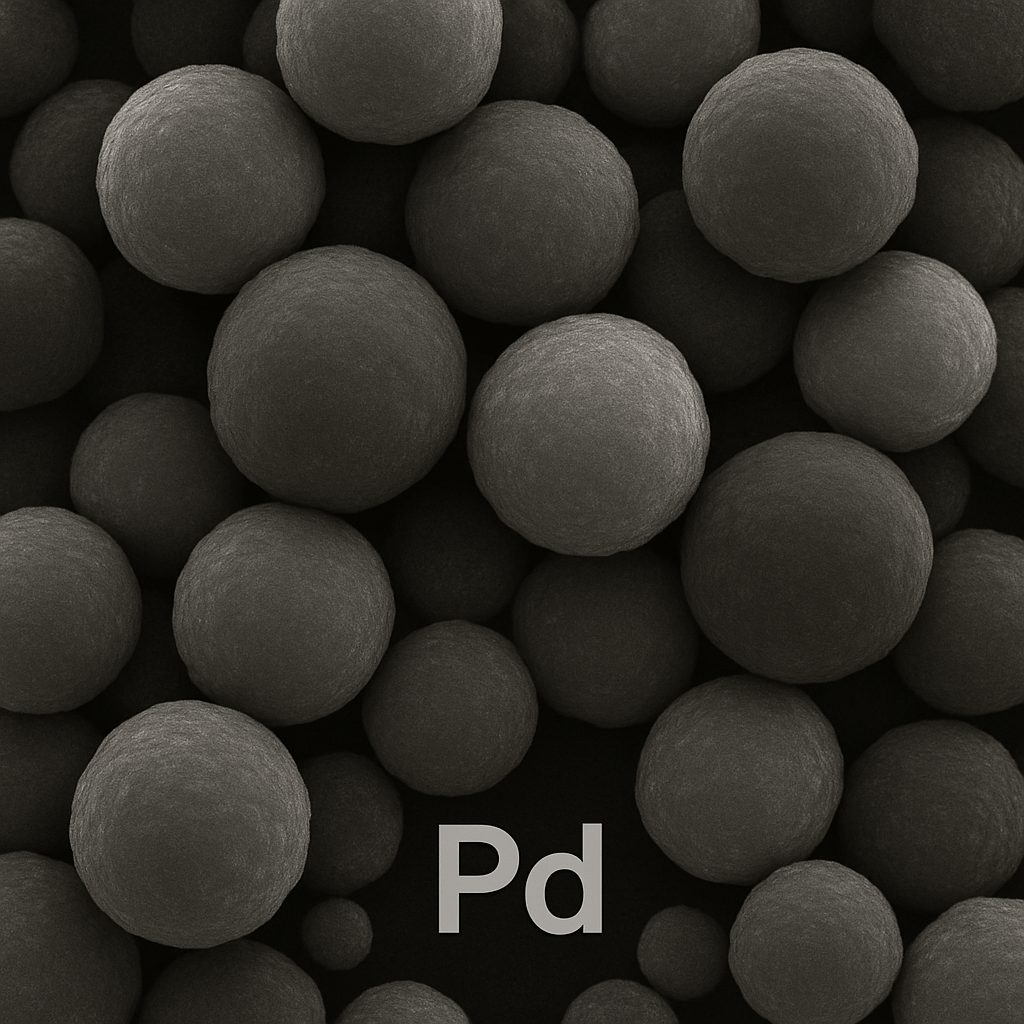
Research into cold fusion, also known as “low energy nuclear reactions” (LENR), is currently experiencing a renaissance with innovative theoretical breakthroughs and practical approaches. While cold fusion has been controversial for decades, new scientific findings are pointing to promising ways to overcome the fundamental Coulomb barrier. Current research focuses on three main mechanisms: electron shields in metallic lattice defects, nuclear resonances caused by pulsed laser radiation, and quantum tunneling effects in metal lattices. In parallel, electrochemical processes using palladium alloys and various reactor designs are being investigated that could enable bot heat generation and transmutation.
Theoretical breakthroughs in overcoming the Coulomb barrier
Electron shields in lattice defects
A revolutionary approach in current cold fusion research is based on the manipulation of electron wave functions in metallic lattices. Researchers have discovered that electron wave functions can focus at certain defects in the crystal lattice in such a way that they effectively shield the positive charge of the atomic nuclei1. This mechanism could drastically reduce the electrostatic repulsion between the nuclei and thereby increase the probability of fusion by up to 25 orders of magnitude1. The significance of this approach lies in the fact that it offers a physically plausible explanation for overcoming the Coulomb barrier at low energies without violating the established laws of quantum mechanics.
However, the practical implementation of this concept requires precisely controlled material defects and specific lattice structures. Scientists are working on the targeted creation of such defects in metal lattices in order to create optimal conditions for electron shielding. This line of research could explain why previous cold fusion experiments have been so difficult to reproduce – it is possible that the fusion reactions only occur in tiny areas with specific nanocracks or other structural anomalies1.
Nuclear resonances through pulsed laser radiation
Another innovative approach uses pulsed laser beams to generate nuclear resonances. This method can cause deformations in atomic nuclei that significantly reduce the energy required for fusion1. Although this approach initially consumes a lot of energy, researchers believe that similar resonance effects could occur at lower energies, making fusion seven orders of magnitude more likely1.
The theoretical basis of this approach is based on the assumption that external electromagnetic fields can temporarily alter the nuclear structure, thereby reducing the fusion barrier. These findings could lead to new reactor designs that use pulsed laser or electromagnetic systems to stimulate fusion reactions. The challenge lies in developing energy-efficient methods for generating the necessary resonances.
Quantum tunneling effects in metal lattices
The third promising mechanism is based on advanced quantum tunneling effects within metal lattices. The environment of the metal lattice could enable an energy exchange in which smaller atomic nuclei temporarily “borrow” energy from surrounding nuclei, fuse, and then return this energy1. This process could increase the fusion rate by up to 30 orders of magnitude1, which would represent a dramatic breakthrough in the efficiency of cold fusion reactions.
This theory extends the understanding of quantum tunneling beyond simple barrier penetration and takes into account complex many-body interactions in condensed matter. However, practical application requires a deep understanding of the electronic and nuclear structures in different metal lattices, as well as the ability to manipulate these structures in a targeted manner.
Electrochemical approaches and materials science
Palladium-deuterium systems
The electrochemical loading of palladium with deuterium remains a central area of research in cold fusion. Studies show that anomalous excess energy and helium production can be observed in both the palladium-deuterium system and the palladium-boron alloy-deuterium system3. A critical factor here is achieving a loading ratio of D/Pd above 0.85, which appears to be necessary for the anomalous excess energy effect3.
Research is focusing on optimizing the loading processes and understanding the factors that enable high loading rates. Surface defects such as cracks or other structural irregularities prevent high loading rates of hydrogen or deuterium in palladium or palladium-boron alloys3. These findings have led to refined preparation methods for palladium electrodes in order to achieve more consistent experimental results.
Palladium-boron alloys
A particularly promising approach uses palladium-boron alloys, which exhibit significantly slower discharge rates than pure palladium. Although the addition of boron to palladium does not significantly affect the initial loading rate, it slows down further loading to higher levels and the discharge process considerably3. Studies show that the D/Pd ratio change in palladium-0.75 weight percent boron alloys is less than -0.001 per minute, which is more than ten times slower than in pure palladium electrodes3.
This slowed discharge could be crucial for maintaining the high deuterium concentrations required for LENR reactions. The hypothesis is that boron accumulates in the grain boundaries during the initial loading and then hinders both the further penetration and escape of hydrogen or deuterium into and out of the metal lattice3. These findings lead to more targeted alloy designs for improved LENR reactors.
Reactor designs and technical implementation
Heat-generating reactors
The first category of promising LENR reactors focuses on heat generation through nuclear fission processes caused by hydrogen corrosion of the lattice2. This group includes the classic Pons-Fleischmann cell, which serves as the basis for modern reactor designs. Nuclear fission results from the fission of palladium due to the diffusion of hydrogen into the crystal lattice2.
These reactor types use electrochemical processes to control the loading of hydrogen or deuterium onto metal cathodes. Modern variants of these reactors use improved calorimetry to precisely measure heat production and optimized electrode materials to maximize loading efficiency. The challenge lies in the reproducibility and scalability of these systems for practical applications.
Transmutation reactors
The second group of LENR reactors is characterized by transmutations of heavy elements and rotating charged dust particles2. These reactors extend the range of applications for LENR beyond simple fusion reactions to the targeted conversion of elements. The rotating charged particles could generate local electromagnetic fields that promote both fusion and transmutation.
These reactor designs are based on advanced plasma technologies and could potentially be used for the treatment of radioactive waste or the production of rare elements. However, the technical complexity of these systems is considerably higher than that of simple electrochemical reactors, which makes their practical implementation difficult.
Electricity generation
The third LENR variant is based on the direct generation of electrical energy by reactors based on surface plasmons and condensed plasmoids2. These reactors could dramatically improve the efficiency of LENR systems by providing the generated energy directly in electrical form without the detour via thermal conversion.
Surface plasmons are collective electron vibrations at metal-dielectric interfaces that can lead to highly localized electromagnetic fields. The use of these phenomena for LENR could lead to compact, highly efficient energy generation systems. However, technical implementation requires advanced nanotechnology and precise control over surface structures.
Current research landscape and institutional support
International research efforts
Cold fusion is experiencing a renaissance in institutional research, with the participation of renowned organizations such as NASA, MIT, and private companies such as Clean Planet Inc1. These institutions are working intensively on LENR research, even though their results are not yet reproducible or do not deliver net energy1. The increased institutional support signals a shift in the scientific perception of cold fusion from a pseudoscientific fringe phenomenon to a legitimate field of research.
The US agency ARPA-E has allocated ten million dollars for LENR research in 20231, underscoring the growing recognition of this technology’s potential. This funding will enable more systematic research approaches and the development of standardized protocols for LENR experiments, which could help improve reproducibility.
Challenges in reproducibility
Despite promising theoretical approaches, practical challenges remain. Many experiments show conflicting results, often due to the variability of the materials used1. Some researchers suspect that fusion only occurs in tiny areas with specific defects, known as nanocracks1, which explains the difficulty of controlled reproduction.
The detection of fusion products such as neutrons or tritium remains difficult and controversial1. These challenges have led to the development of improved measurement techniques and diagnostic methods that are more sensitive and specific to LENR signatures. The standardization of experiments and the development of quality control protocols are crucial for further progress in the field.
Theoretical foundations and alternative models
Widom-Larsen theory
The Widom-Larsen theory is an alternative theoretical framework for LENR processes that was formulated in 20054. According to this theory, “ultracold” neutrons are generated which, due to their low energy above the rest mass, have enormous dimensions in the wave description4. This theory attempts to explain nuclear reactions in which the Coulomb barrier does not play a role4.
Although the Widom-Larsen theory is not widely accepted in academic physics and no practical implementation or experimental evidence is known4, it offers an interesting theoretical approach to explaining anomalous nuclear reactions. The theory could be particularly relevant for understanding transmutation processes in LENR systems, even if its experimental validation is still pending.
Comparison with hot fusion
The differences between cold and hot fusion are becoming increasingly clear in current research. While hot fusion requires temperatures above 100 million degrees Celsius and is scientifically recognized, cold fusion aims at fusion at room temperature or relatively low temperatures1. The energy balance of functioning cold fusion methods is currently still unfavorable, as the energy input is higher than the energy output1.
Despite billions of dollars invested in hot fusion projects such as ITER, no positive energy gain has yet been achieved1. This underscores the importance of alternative approaches such as cold fusion, which could offer potentially simpler and more cost-effective paths to fusion energy.
Future prospects and technological applications
Potential areas of application
The successful development of cold fusion technology could have revolutionary implications for various fields. As a virtually unlimited, clean energy source, it could replace the need for fossil fuels and contribute to solving the global energy crisis1. In addition, LENR systems could be used for decentralized energy supply, space applications, and even for the treatment of radioactive waste through transmutation.
The compactness and potential safety of LENR reactors compared to conventional nuclear reactors could open up new applications in mobile energy supply. From portable generators to propulsion systems for vehicles, LENR technologies could enable a wide range of applications.
Technological development paths
Current research directions point to several parallel development paths. In the short term, research is focusing on improving reproducibility and understanding the fundamental mechanisms. In the medium term, the first practical demonstrators for specific applications could be developed, while in the long term, commercial LENR systems could become feasible.
The integration of different approaches—from theoretical breakthroughs to materials science and reactor design—will be crucial for the successful transition from basic research to practical application. The interdisciplinary nature of LENR research requires close collaboration between physicists, materials scientists, engineers, and other disciplines.
Conclusion
Current research on cold fusion shows promising scientific approaches that have the potential to solve one of the greatest challenges in modern physics. The combination of theoretical breakthroughs—in particular the three mechanisms for overcoming the Coulomb barrier—and practical advances in materials science and reactor technology is creating new hope for the realization of controllable LENR systems. While significant challenges remain in terms of reproducibility and the detection of fusion products, increased institutional support and funding point to a promising future for this field of research.
The successful development of cold fusion technology would not only revolutionize energy supply, but also open up new possibilities in transmutation and materials science. Current research approaches, ranging from electron shields in lattice defects to advanced reactor designs, demonstrate the potential for practical breakthroughs in the coming years, provided that the scientific community continues its intensive research efforts and overcomes the existing technical hurdles.
Citations:
- https://www.all-electronics.de/elektronik-entwicklung/forscher-wollen-kalte-fusion-moeglich-machen-theoretisch-227.html
- https://lenr.wiki/index.php/Facetten_von_LENR_-_Teil_5A:_Konstruktions-_und_Betriebsprinzipien_von_LENR-Reaktoren
- https://lenr-canr.org/acrobat/MilesMelectrochec.pdf
- https://www.psiram.com/de/index.php/Widom-Larsen-Theorie
- https://www.ans.org/news/article-4769/arpae-picks-eight-teams-to-proveor-debunklowenergy-nuclear-reactions/
- https://energiesmedia.com/article/brillouin-energy-hydrogen-hot-tube-technology-achieves-performance-breakthroughs-a-revolution-in-low-cost-ultra-safe-pollution-free-energy/
- https://www.lenr-forum.com/forum/thread/6535-clean-planet-ltd-japan-updates/
- https://ntrs.nasa.gov/api/citations/20150000549/downloads/20150000549.pdf
- https://lenr-canr.org/acrobat/StringhamRwhenbubble.pdf
- https://home.uni-leipzig.de/pwm/teaching/ExPhys4_SS09/script/EP4_apr30_09extra.pdf
- https://patents.google.com/patent/US20190066852A1/en
- https://jcmns.org/article/72278.pdf
- http://en.rensit.ru/vypuski/article/372/13(1)45-58e.pdf
- https://de.wikipedia.org/wiki/Kalte_Fusion
- https://lenr.wiki/index.php?title=Die_direkte_Erzeugung_von_elektrischer_Energie_aus_LENR
- https://atap.lbl.gov/news/berkeley-lab-to-lead-arpa-e-low-energy-nuclear-reactions-project/
- https://www.chemie.de/lexikon/Myon.html
- https://www.lenr-canr.org/acrobat/LietzHunbeachtet.pdf
- https://www.lenr-canr.org/acrobat/ARPAElowenergyn.pdf
- https://www.chemie.de/lexikon/Kalte_Fusion.html
- https://www.ipp.mpg.de/2545522/faq10
- https://www.factory-magazin.de/news/standpunkt-mehr-forschung-fuer-die-kalte-fusion
- https://arpa-e.energy.gov/news-and-events/news-and-insights/us-department-energy-announces-10-million-funding-projects-studying-low-energy-nuclear-reactions
- https://arpa-e.energy.gov/programs-and-initiatives/search-all-projects/advanced-materials-characterization-and-nuclear-product-detection-lenr
- https://arpa-e.energy.gov/sites/default/files/2025-01/Project%20Descriptions_LENR.pdf
- https://anthrowiki.at/Kalte_Fusion
- https://www.e-catworld.com
- https://lenr.wiki
- https://www.rightenergy.de/was-ist-e-cat-power-faq/
- https://www.worldscientific.com/doi/10.1142/9789812774354_0007
- https://newenergytimes.com/v2/news/2010/35/3513ICCF15report.shtml
- http://meshorerlab.huji.ac.il/papers/Omer_OCT4_2023.pdf
- https://www.chemie.de/lexikon/Low_Energy_Nuclear_Reaction.html
- https://de.wikipedia.org/wiki/Oberfl%C3%A4chenplasmon
- https://www.e-cat-deutschland.de/kalte-fusion/kalte-fusion-technologie.html
- https://www.deutschlandfunk.de/tolle-idee-was-wurde-daraus-kernfusion-im-kuehlschrankformat-100.html
- https://matslew.wordpress.com/2013/07/24/comments-on-defkalion-reactor-demo-in-milan/
- https://www.elettra.eu/about/index.html
- https://newfireenergy.substack.com/p/rossis-e-cat-ngu-set-to-go-commercial
- https://news.newenergytimes.net/2012/10/24/university-of-missouri-acquires-energetics-lenr/
- https://www.energetics-technology.com
- https://www.lenr-canr.org/acrobat/DardikIprogressin.pdf
- https://solidstatefusion.org/2024/05/iccf24_proceedings/
- https://www.infinite-energy.com/resources/iccf25.html
- https://catalyticfusion.com/Infinite%20Energy%20Magazin/8%20r%C3%A9szes%20cikksorozat/Egely%20-%20Faces%20of%20LENR%20Part4%20(IE155).pdf
- https://www.itwm.fraunhofer.de/en/fairs_events/2024/2024_04_02_iccf24_en.html
- https://www.youtube.com/watch?v=MAA2ssOV5z4
- https://www.tierschutzpartei.de/28-oktober-erstes-1-megawatt-lenr-kraftwerk-erfolgreich-getestet/
- https://solidstatefusion.org/2024/05/michael-mckubre/
- https://www.esd.whs.mil/Portals/54/Documents/FOID/Reading%20Room/Science_and_Technology/16-F-1333_%20DOC_02_LENR_Briefing.pdf
- https://lenrgyllc.com/documenting-research/
- https://lenr.wiki/index.php/LENR_%E2%80%93_die_unendliche_und_saubere_Energie_kommt_fr%C3%BCher_als_gedacht
- https://www.newenergytimes.com/v2/sr/McKubreM4/michael-mckubre-lenr-hero-who-crossed-the-line.shtml
 Impossible Fusion