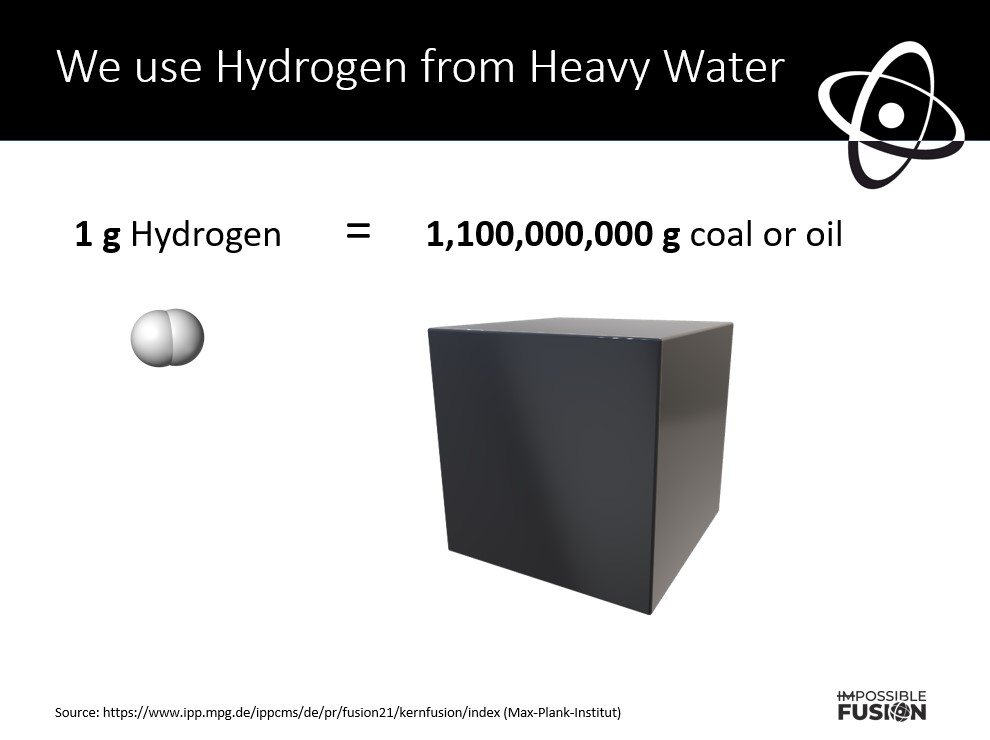
The aim of fusion research is to generate energy from the fusion of atomic nuclei in a power plant. Under underground conditions, the two types of hydrogen, deuterium and tritium, fuse most easily. This produces a helium nucleus, releases a neutron, and generates large amounts of usable energy: one gram of fuel could generate 90,000 kilowatt hours of energy in a power plant – the combustion heat of 11 tons of coal.
Fusion fuels are cheap and evenly distributed across the Earth. Deuterium is found in almost inexhaustible quantities in seawater. Tritium—a radioactive gas with a short half-life of 12.3 years—is rarely found in nature. However, it can be produced within the power plant from lithium, which is also abundant. Since a fusion power plant will also have favorable environmental and safety characteristics, fusion could make a sustainable contribution to future energy supply.
 Impossible Fusion