Fusion energy from an infinite and
renewable resource: Heavy Water

Our Aim: Building a Fusion Cell for independend Power Supply
Around the world, the search is on for solutions to generate renewable and clean energy to meet the challenges of the future.
At Impossible Fusion GmbH, our goal is to develop a Fusion Cell capable of producing large amounts of energy in a compact space through cold fusion. The Fusion Cell is designed to be deployed wherever and whenever energy is needed.
Our business concept is innovative and globally unique – there is currently no comparable product or project on the market.
Inside the Fusion Cell, hydrogen atoms fuse into helium at room temperature. The device functions similarly to a fuel cell or battery but is powered by a fundamentally different, fusion-based process.
Recent climate-driven research efforts by organizations including the European Commission, NASA, the U.S. Navy, and Google have produced energy-positive results. Building on these breakthroughs, Impossible Fusion GmbH is advancing the development of its own Fusion Cell.
What sets us apart is our distinctive approach, combining proven methods with cutting-edge technologies in the field of cold fusion – such as carbon nanotubes, rare earth metals, and laser induction – along with newly available instruments capable of measuring fusion byproducts for the first time.
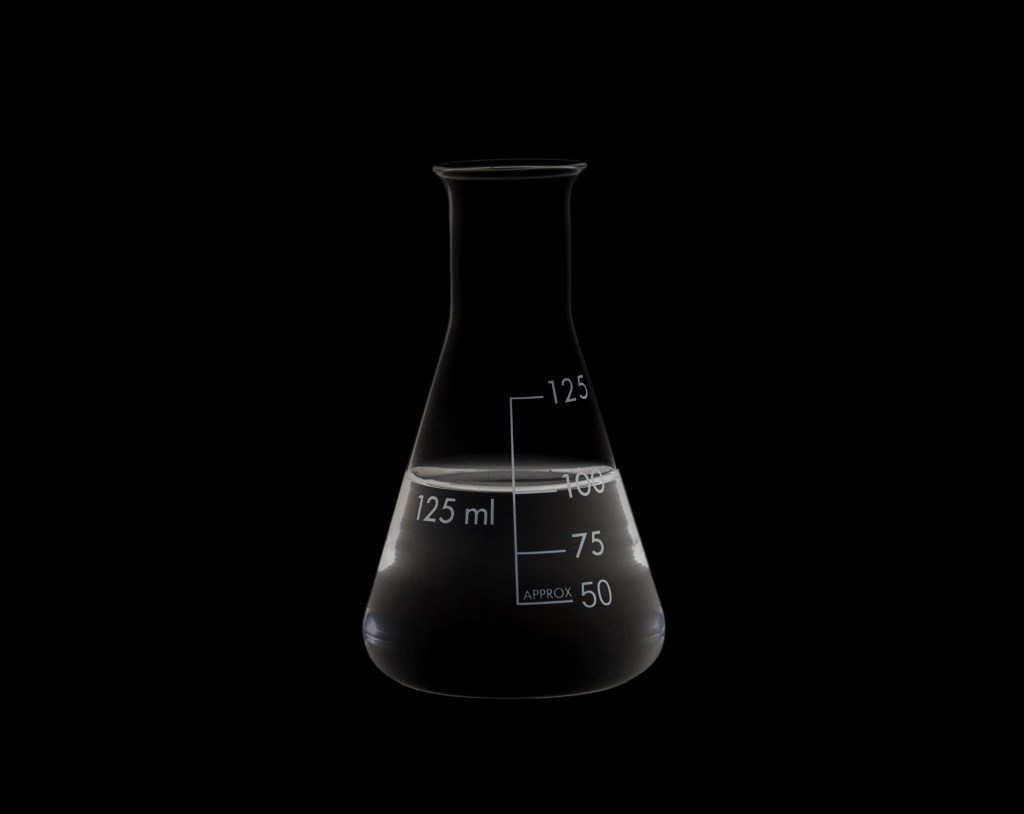
Learn about Heavy Water
Heavy water is found in natural water bodies, but only in small concentrations. Ordinary water (H2O) contains hydrogen atoms, and a very small fraction of these hydrogen atoms are naturally occurring heavy hydrogen atoms, a variant of hydrogen with one additional neutron. When two heavy hydrogen atoms bond with an oxygen atom, heavy water is formed. The concentration of heavy water in natural water sources is about 0.015% or 150 parts per million, which means that a bathtub full of water contains a shot glass of heavy water. It is known that the biological effect of heavy water can be different to that of normal water. While normal water is known to be tasteless, heavy water tastes sweet.
Unique properties of heavy water
Ordinary water consists of one oxygen atom (O) and two hydrogen atoms (H) and therefore has the chemical formula H2O. However, there is also “heavy hydrogen”, which has twice the mass of ordinary hydrogen. Its atomic nucleus consists of a proton and a neutron, while the “normal” hydrogen nucleus consists of only one proton. Heavy hydrogen is also known as deuterium and is abbreviated as D. And so there is also the molecule D2O, the so-called heavy water. The physical properties of light and heavy water are only minimally different. For example, D2O has a slightly higher freezing and boiling point. Additionally, heavy water is used in various scientific, medical, and industrial applications due to its unique nuclear and physical properties.
Heavy Water and Low Energy nuclear reactions
Heavy water (D2O) plays a significant role in low energy nuclear reaction research due to its unique properties, particularly in relation to deuterium, the isotope of hydrogen that composes it. Heavy water contains deuterium atoms, which are hydrogen atoms with an additional neutron. This extra neutron makes deuterium more likely to undergo nuclear fusion compared to ordinary hydrogen. In cold fusion experiments, the aim is to achieve nuclear fusion at much lower temperatures than those required in traditional fusion reactions. The presence of deuterium, with its additional neutron, is crucial in increasing the probability of such low-temperature fusion events. The key reaction in many cold fusion experiments is between two deuterium nuclei. In heavy water, the deuterium atoms are already present in a relatively dense medium, making it more likely for them to come close enough to potentially overcome the Coulomb barrier – the repulsive force between two positively charged nuclei – and achieve fusion.
Latest posts
-

Why hot fusion may never work
Scientists differentiate between hot fusion and cold fusion. Hot fusion is trying to bring the sun down to earth. Hot fusion requires temperatures of up to 150.000.000 degree celsius (ITER reactor), extrem vacuum or pressure and very strong magnetic fields. The aim is to bring hydrogen atoms or its isotops so close together that they…
-
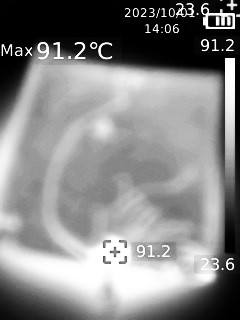
Fusion reaction reaches 93°C
Again we are reaching high and lasting temperatures of the Palladium cathode in heavy water electrolysis. The picture of our thermal imaging camera shows the Palladium cathode after a short laser trigger.
-

Low Energy Nuclear Reactions
Introduction into Low Energy Nuclear Reactions LENR also known as Cold Fusion.

